
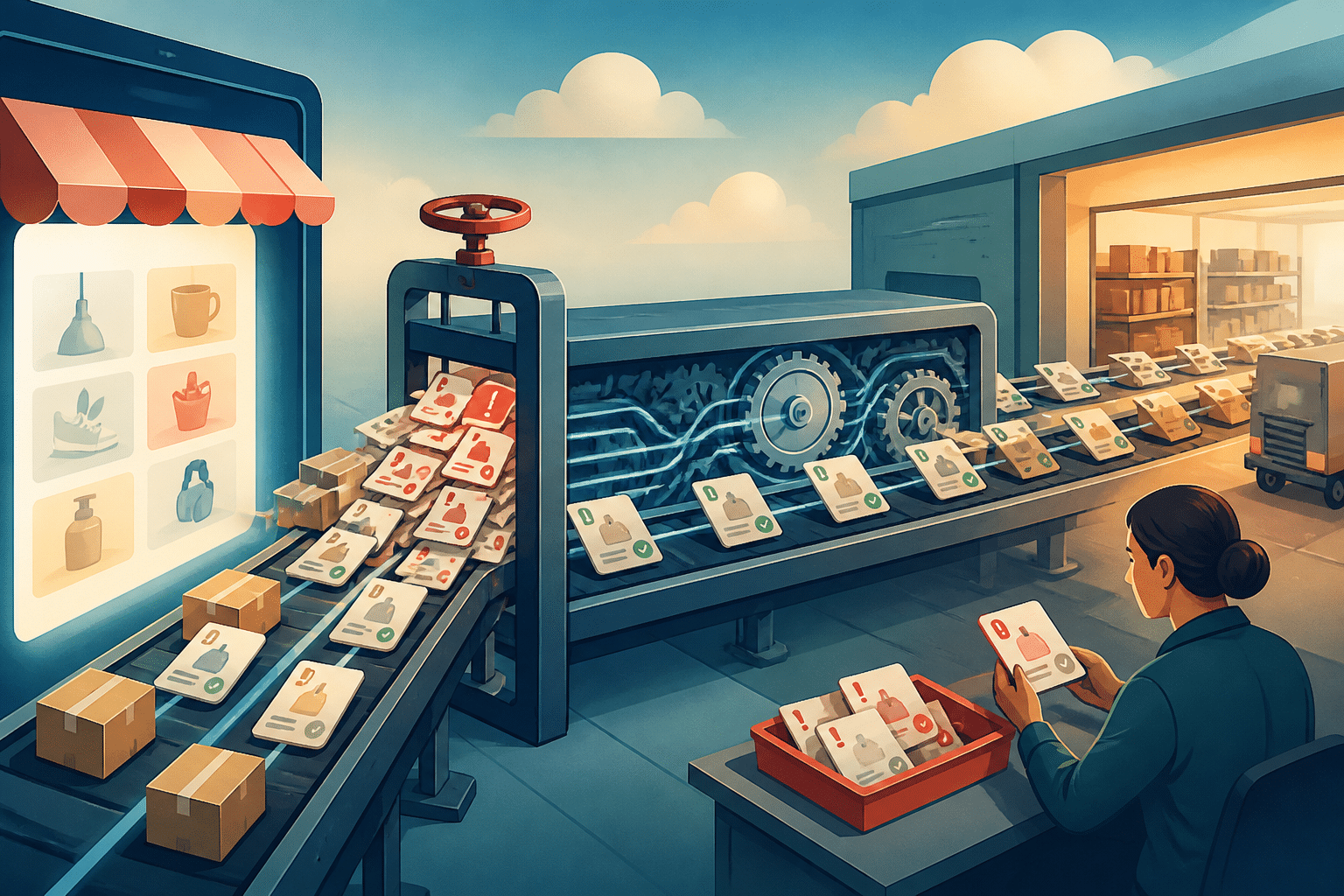
“The website confirmed the order, but that merchandise had already been reserved for another customer.” Inventory reservations must be coordinated between the digital portal and the ERP before a delivery is confirmed. The problem is not just that inventory figures differ. It also matters when each unit is committed and what rules determine its availability. If two channels offer the same merchandise, the sales promise may exceed what operations can actually deliver.
Inventory reservations: availability is not the same as physical stock
To make reliable decisions, separate the data that describes your operations. Physical inventory indicates the units recorded in the warehouse. Reservations show the units that have been committed. In addition, pending orders and ERP transactions help clarify what still needs to be processed or shipped. If the portal only checks physical stock, it may offer merchandise that already has an operational commitment.
Availability for sale depends on how these data points are combined and on your company’s rules. For example, a unit may be in the warehouse but unavailable for a new order because it has already been allocated to a strategic account. Confusing stock on hand with stock available for sale turns a correct inquiry into a mistaken promise. Phantom inventory occurs when systems fail to distinguish what is available, reserved, or ready to ship. You can learn more in the guide to B2B phantom inventory and inventory synchronization.
What happens between checking availability, reserving, and shipping
The sequence must prevent two channels from committing the same unit. First, e-commerce checks availability calculated using current inventory and reservations. Next, the order requests a reservation. The customer receives confirmation only after that transaction has been recorded. This ensures that a stock inquiry is not treated as an allocation by itself.
If the order is canceled or expires, the reservation must be released according to the agreed rules. When the merchandise is picked and shipped, the ERP records the transactions and updates the availability shown to the digital channel. You must also define what happens when quantities change, orders are incomplete, or issues arise during fulfillment. Without clear rules for each stage, the integration can transmit data and still leave room for overselling.
The financial impact of a promise you can’t keep
When a reserved product does not reach the customer, the company may turn to substitutions, issue credit memos, or repeat validation and data-entry tasks. These corrections take time and can erode the order’s gross margin. In addition, an incomplete delivery affects service levels. As a result, a corporate customer might dispute or withhold payment. A fixed cost cannot be assigned without reviewing each company’s cases and commercial terms.
To measure the impact, track the order error rate, service level, gross margin, and DSO. These are distinct metrics: some reflect operational errors and performance, while others help assess their relationship to profitability and collections. However, concluding that the team needs more Data Entry does not resolve an ambiguous reservation rule or delayed synchronization. The goal is to reduce manual transcription without discounting the people who maintain daily controls.
Apply the NEXO Method to inventory reservations
Diagnosis: Identify where a reservation is duplicated, lost, or remains active after a cancellation. Compare records from the portal, ERP, and warehouse to reconstruct the order cycle. This will help you identify when the sale was confirmed and what information each channel had.
In-depth investigation: Document the rules for committing, canceling, and releasing units. Include pricing matrices, credit limits, unit-of-measure conversions, and shipping preparation requirements. These controls affect whether an order is accepted and fulfilled. That is why you should analyze them alongside availability, not as isolated data points.
Action plan: Define reliable availability and a shared rule for checking and reserving inventory in real time across e-commerce and ERP. Clarify which system records each change and when an order is considered confirmed. Also establish how to recover a reservation if the process is interrupted. The architecture must respect existing controls and reduce manual transcription steps.
Execution: Validate the full cycle, from the initial availability check to release or shipment. Assign owners for each stage and test scenarios involving cancellations, quantity changes, and simultaneous orders across different channels. Synchronization must support operations. It should not, however, displace established procedures that protect credit, pricing, and shipping without careful consideration.
Protect the accounts you can’t afford to let down first
Before expanding digital sales, verify that every promise is based on available and reserved units according to your company’s rules. Start with strategic accounts. Review how their inventory is committed and how each change is reflected in the portal, ERP, and warehouse. Protecting that continuity turns availability into an operational promise, rather than a figure the team has to correct later.